
Online Database of Chemicals from Around the World
| Simagchem Corporation | China | |||
|---|---|---|---|---|
 | www.simagchem.com | |||
 | +86 13806087780 | |||
 | +86 (592) 268-0237 | |||
 | sale@simagchem.com | |||
| Chemical manufacturer since 2002 | ||||
| chemBlink Standard supplier since 2008 | ||||
| Hefei TNJ Chemical Industry Co., Ltd. | China | |||
|---|---|---|---|---|
| www.tnjchem.com | |||
| +86 (551) 6541-8684 | |||
| +86 (551) 6541-8697 | |||
| sales@tnjchem.com | |||
| Chemical manufacturer since 2001 | ||||
| chemBlink Standard supplier since 2010 | ||||
| BOC Sciences | USA | |||
|---|---|---|---|---|
| www.bocsci.com | |||
| +1 (631) 485-4226 | |||
| +1 (631) 614-7828 | |||
| info@bocsci.com | |||
| Chemical manufacturer | ||||
| chemBlink Standard supplier since 2010 | ||||
| Chembridge International Corp. Taipei / Dongguan / Nanjing | China | |||
|---|---|---|---|---|
| www.chembridge.com.tw | |||
| +886 (2) 2649-6320 +86 (769) 2250-4087 +86 (25) 8471-2192 | |||
| +886 (2) 2704-3915 / +86 (769) 2246-8225 / +86 (25) 8471-2052 | |||
| cnservice@chembridge.net | |||
| Chemical manufacturer | ||||
| chemBlink Standard supplier since 2011 | ||||
| Shandong Zhishang Chemical Co., Ltd. | China | |||
|---|---|---|---|---|
| www.zhishangchemical.com | |||
| +86 17653113209 13065062079 | |||
| sales001@sdzschem.com sales002@sdzschem.com | |||
 | QQ Chat | |||
| Chemical manufacturer since 2016 | ||||
| chemBlink Standard supplier since 2022 | ||||
| Shandong Look Chemical Co., Ltd. | China | |||
|---|---|---|---|---|
| www.sdlookchem.com | |||
| +86 17653113219 | |||
| sales01@sdlookchem.com | |||
| QQ Chat | |||
| Chemical distributor since 2016 | ||||
| chemBlink Standard supplier since 2022 | ||||
| Anxin Cellulose Co., Ltd. | China | |||
|---|---|---|---|---|
| www.ihpmc.com | |||
| +86 15269329906 | |||
| sales@ihpmc.com | |||
 | WeChat: +86 15269329906 | |||
 | WhatsApp:+8615269329906 | |||
| Chemical manufacturer since 2022 | ||||
| chemBlink Standard supplier since 2022 | ||||
| Hebei Cellulose Ethers Co., Ltd. | China | |||
|---|---|---|---|---|
| www.hpmccelluloses.com | |||
| +86 (0311) 8569-3256 | |||
| sales@hpmccelluloses.com | |||
| WeChat: +8613731126075 | |||
| WhatsApp:+8613731126075 | |||
| Chemical manufacturer since 2008 | ||||
| chemBlink Standard supplier since 2023 | ||||
| Shandong Kundu Chemical Co., Ltd. | China | |||
|---|---|---|---|---|
| www.kdochem.com | |||
| +86 (531) 8292-4317 | |||
| kdochemical@gmail.com | |||
| Chemical manufacturer since 2017 | ||||
| chemBlink Standard supplier since 2026 | ||||
| Scientific Polymer Products, Inc. | USA | |||
|---|---|---|---|---|
| www.scientificpolymer.com | |||
| +1 (585) 265-0413 | |||
| +1 (585) 265-1390 | |||
| custserv@scipoly.com | |||
| Chemical manufacturer | ||||
| PCI Synthesis, Inc. | USA | |||
|---|---|---|---|---|
| www.pcisynthesis.com | |||
| +1 (978) 462-5555 463-4853 | |||
| +1 (978) 465-2057 | |||
| sales@pcisynthesis.com | |||
| Chemical manufacturer | ||||
| Classification | Catalysts and additives >> Polymer |
|---|---|
| Name | Ethylene-vinyl acetate copolymer |
| Synonyms | Poly(ethylene-co-vinyl acetate) |
| Molecular Structure | 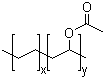 |
| Molecular Formula | (C2H4)x.(C4H6O2)y |
| CAS Registry Number | 24937-78-8 |
| EC Number | 429-840-1 |
| SMILES | C=C.C=CCC(=O)O |
| SDS | Available |
|---|---|
 chemBlink Chemical Story
|
A solar cell needs more than a semiconductor to work reliably outdoors. Light must reach it, electrical connections must remain in place, and a multilayer structure must survive environmental exposure. Ethylene-vinyl acetate copolymer, commonly called EVA, became an important material in that surrounding structure. Its role in photovoltaic encapsulation shows how a seemingly passive polymer can influence the lifetime of an energy device. EVA, CAS 24937-78-8, is a copolymer of ethylene and vinyl acetate. The two monomer-derived units occur within polymer chains; it is not simply a mixture of polyethylene and a separate acetate polymer. The vinyl acetate units carry pendant acetate groups. These are chemically different from the hydroxyl groups associated with polyvinyl alcohol, despite the similar names that sometimes cause confusion. There is no single molecular weight or universal composition for the CAS entry. Commercial EVA grades differ in vinyl acetate content, chain characteristics, and flow behavior. Supplier catalogs, for example, identify grades with specified vinyl acetate weight fractions. Such a specification describes a particular product, not every material sold as EVA. Additives and processing further distinguish a finished encapsulation film from an unformulated resin. At a structural level, introducing vinyl acetate units interrupts the regularity of polyethylene-like sequences and changes how chains pack. This helps explain why copolymer composition influences crystallinity, flexibility, and processing. It does not mean that increasing one component guarantees a better encapsulant. Optical properties, adhesion, electrical insulation, mechanical response, and durability must be considered together for the intended module construction. During module manufacture, an encapsulation film becomes part of a laminated assembly around the cells. Suitable EVA formulations can be crosslinked during processing, connecting polymer chains into a network. That network changes how the material responds to heat and mechanical stress. Crosslinking is a property of the formulation and its processing history, however, rather than something the bare CAS number establishes for every EVA sample. Research has also examined what happens when encapsulation materials age. A 2007 study by Michael Kempe and colleagues investigated acetic acid production and glass-transition concerns in EVA used for photovoltaic devices. The work connected degradation under water or ultraviolet exposure with acid formation and examined associated corrosion concerns. It identified mechanisms that deserve engineering attention; it did not establish that every EVA module will fail in the same way or on the same schedule. The distinction between blocking water and responding to water is especially useful. An encapsulant may protect a fragile assembly mechanically while still allowing moisture transport over time. Once water is present, its interactions with polymers and neighboring components become another question. A material can therefore perform one protective function well without being an absolute barrier against every environmental influence. Evaluating an encapsulant consequently involves both initial measurements and aging experiments. A clear film on the day of manufacture does not by itself demonstrate long-term light transmission. Strong initial adhesion does not automatically predict adhesion after heat and moisture exposure. Laboratory tests help separate these questions, although translating accelerated conditions into years outdoors requires care. EVA's photovoltaic story is about the chemistry between the obvious functional parts. The semiconductor converts light into electrical energy, while the polymer helps make that conversion usable in a manufactured assembly. Its successes and limitations demonstrate why polymer identity, formulation, interfaces, and service conditions must be studied as a connected system. References: 1. Sigma-Aldrich. Poly(ethylene-co-vinyl acetate), product 437247; a specified EVA grade. https://www.sigmaaldrich.com/US/en/product/aldrich/437247 2. Kempe MD et al. Acetic Acid Production and Glass Transition Concerns with Ethylene-Vinyl Acetate Used in Photovoltaic Devices. Solar Energy Materials and Solar Cells (2007). https://doi.org/10.1016/j.solmat.2006.10.009 |
| Market Analysis Reports |