
Online Database of Chemicals from Around the World
| Choriway International Trade Co., Ltd. | China | |||
|---|---|---|---|---|
 | www.choriway.com | |||
 | +86 (510) 8260-6408 | |||
 | +86 (510) 8270-0244 | |||
 | sales@choriway.com | |||
| Chemical distributor | ||||
| chemBlink Standard supplier since 2007 | ||||
| Simagchem Corporation | China | |||
|---|---|---|---|---|
| www.simagchem.com | |||
| +86 13806087780 | |||
| +86 (592) 268-0237 | |||
| sale@simagchem.com | |||
| Chemical manufacturer since 2002 | ||||
| chemBlink Standard supplier since 2008 | ||||
| Hefei TNJ Chemical Industry Co., Ltd. | China | |||
|---|---|---|---|---|
| www.tnjchem.com | |||
| +86 (551) 6541-8684 | |||
| +86 (551) 6541-8697 | |||
| sales@tnjchem.com | |||
| Chemical manufacturer since 2001 | ||||
| chemBlink Standard supplier since 2010 | ||||
| BOC Sciences | USA | |||
|---|---|---|---|---|
| www.bocsci.com | |||
| +1 (631) 485-4226 | |||
| +1 (631) 614-7828 | |||
| info@bocsci.com | |||
| Chemical manufacturer | ||||
| chemBlink Standard supplier since 2010 | ||||
| Medilink Pharmachem | India | |||
|---|---|---|---|---|
| www.medilinkpharma.com | |||
| +91 (79) 3007-0133 | |||
| +91 (79) 4007-4175 | |||
| exports@medilinkpharma.com | |||
| Chemical distributor since 1996 | ||||
| chemBlink Standard supplier since 2014 | ||||
| Neemcco | India | |||
|---|---|---|---|---|
| neemcco.com | |||
| +91 9820039043 | |||
| +91 9820039043 | |||
| office@neemcco.com | |||
 | WhatsApp:91 9820039043 | |||
| Chemical manufacturer since 1969 | ||||
| chemBlink Standard supplier since 2026 | ||||
| Wuhan Hongxin Chemical Industry Co., Ltd. | China | |||
|---|---|---|---|---|
| www.hongxin-chem.cn | |||
| +86 (27) 8485-5955 +86 13871391066 | |||
| +86 (27) 8485-5956 | |||
| hongxinchem@hongxin-chem.cn | |||
| Chemical manufacturer | ||||
| Chemos GmbH & Co. KG | Germany | |||
|---|---|---|---|---|
| www.chemos.de | |||
| +49 871-966346-0 | |||
| +49 871-966346-13 | |||
| chemos@chemos.de | |||
| Chemical distributor | ||||
| ChemPur GmbH | Germany | |||
|---|---|---|---|---|
| www.chempur.de | |||
| +49 (721) 933-840 | |||
| +49 (721) 47-2001 | |||
| info@chempur.de | |||
| Chemical manufacturer | ||||
| Classification | Inorganic chemical industry >> Inorganic salt >> Phosphides, metal phosphoric acid, metaphosphoric acid, hypophosphorous acid and pyrophosphate |
|---|---|
| Name | Calcium hypophosphite |
| Synonyms | Calcium phosphinate |
| Molecular Structure | 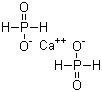 |
| Molecular Formula | CaH4O4P2 |
| Molecular Weight | 170.06 |
| CAS Registry Number | 7789-79-9 |
| EC Number | 232-190-8 |
| SMILES | [O-]P=O.[O-]P=O.[Ca+2] |
| Hazard Symbols |   GHS02;GHS07 DangerGHS02; Details | ||||||||||||||||||||||||
|---|---|---|---|---|---|---|---|---|---|---|---|---|---|---|---|---|---|---|---|---|---|---|---|---|---|
| Risk Statements | H228-H302-H319 Details | ||||||||||||||||||||||||
| Safety Statements | P210-P240-P241-P264-P264+P265-P270-P280-P301+P317-P305+P351+P338-P330-P337+P317-P370+P378-P501 Details | ||||||||||||||||||||||||
| Hazard Classification | |||||||||||||||||||||||||
| |||||||||||||||||||||||||
| SDS | Available | ||||||||||||||||||||||||
 chemBlink Chemical Story
|
A flame-retardant ingredient is useful only in the context of the material containing it. Calcium hypophosphite, CAS 7789-79-9, provides a clear example. It is a calcium salt of hypophosphorous acid, conventionally written Ca(H2PO2)2. Its identity depends on the hypophosphite anion, which should be distinguished from the more oxidized phosphate and phosphite families. That distinction is more than terminology. Hypophosphite contains phosphorus-hydrogen bonds and has different chemical behavior from an ordinary phosphate. Calling the compound a calcium-containing phosphorus salt does not sufficiently describe its reactivity. Nor does the presence of calcium make it equivalent to a nutritional calcium preparation. Its research applications depend on the complete salt structure and the surrounding formulation. A 2019 Fire and Materials study investigated calcium hypophosphite in several thermoplastics, including polyamide 6, poly(lactic acid), thermoplastic polyurethane, and poly(methyl methacrylate). The researchers compared combustion and thermal behavior using several test methods. The reported effects differed with the polymer, demonstrating that an additive's performance is not a single property that can be transferred unchanged from one resin to another. The study discussed both condensed-phase and gas-phase contributions. In the solid or molten residue, a char structure can influence the transfer of heat and decomposition products. In the gas phase, changes in the combustion environment can affect flame chemistry. These mechanisms address different parts of a burning system and help explain why more than one measurement is needed to understand a formulation. A 2024 Thermochimica Acta paper examined calcium hypophosphite in a halogen-containing flame-retardant system as an alternative to an antimony-containing component. This is a separate formulation question from adding the salt alone. It illustrates how phosphorus-based chemistry can be investigated together with other ingredients rather than being described only through an isolated-material label. Interpreting such work requires keeping the tested material in view. Polymer identity, additive loading, other ingredients, specimen form, and the chosen fire test all influence the meaning of a result. Reduced burning in a particular test is not proof that every object containing the salt is nonflammable. Thermal behavior of the ingredient itself also remains relevant to processing and cannot be inferred from its role in a finished flame-retardant composition. The tests also answer different questions. A limiting oxygen index measurement examines the oxygen concentration required to sustain burning under its specified setup. A vertical burning test examines behavior in another defined specimen arrangement. Thermogravimetric analysis follows mass change during heating, while calorimetry addresses heat release. Agreement or differences among those results help characterize a system; no single number describes every aspect of a fire. The polymer is an active part of that comparison. Its decomposition products and residue interact with the additive's behavior, rather than merely serving as an inert container. Testing several polymers with the same ingredient therefore probes how the surrounding chemistry changes the outcome. This is one reason that selecting an additive and demonstrating a useful finished composition are distinct stages in materials development. The compound's chemical story is therefore about context-dependent cooperation. A defined inorganic salt becomes part of a larger system in which decomposition, residue formation, and flame chemistry interact. Its value is established by testing the actual formulation and explaining which features of that system changed, rather than assuming that the words flame retardant describe the behavior of every material in which it might be placed. References: 1. Honeywell Research Chemicals. Calcium hypophosphite, CAS 7789-79-9; formula and identity. https://lab.honeywell.com/shop/calcium-hypophosphite-04408 2. Savas Atabek L et al. The flame-retardant effect of calcium hypophosphite in various thermoplastic polymers. Fire Mater. 2019;43:294-302. https://doi.org/10.1002/fam.2700 3. Phosphorus features halogen: calcium hypophosphite replaces antimony trioxide, reduces smoke, and improves flame retardancy. Thermochim Acta. 2024. https://doi.org/10.1016/j.tca.2024.179764 |
| Market Analysis Reports |